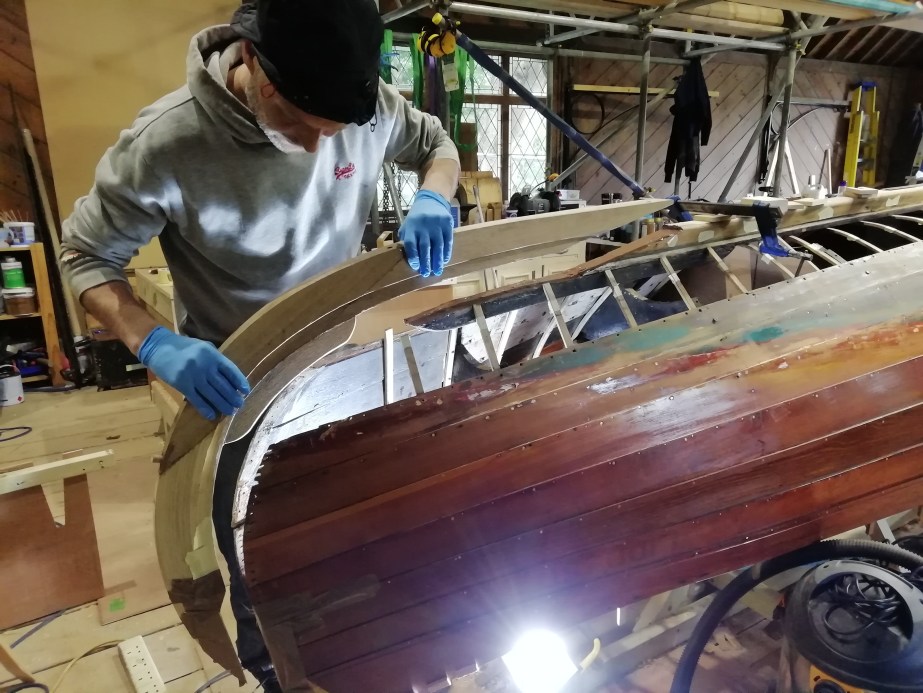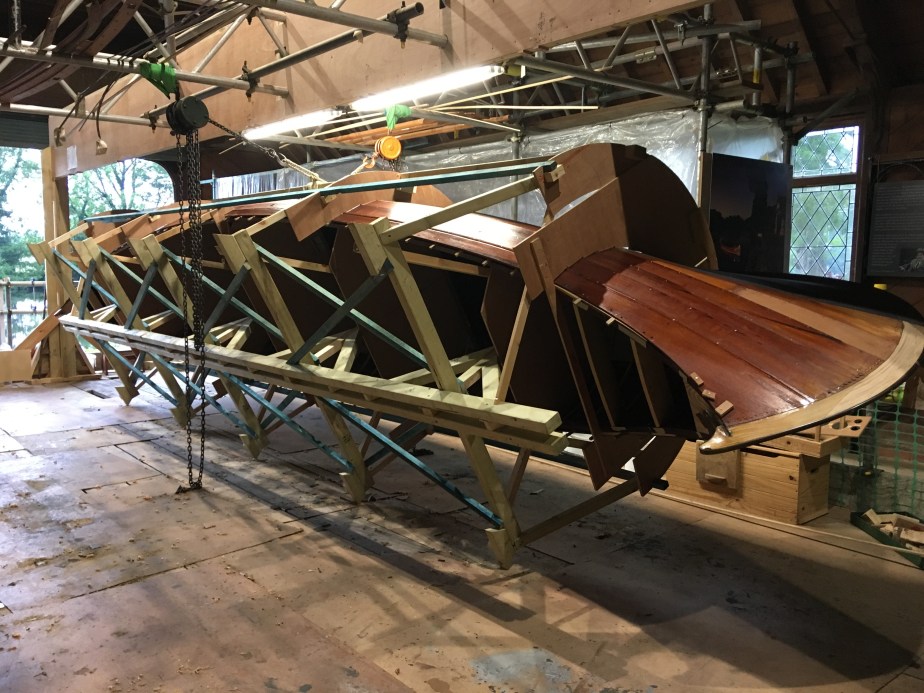
Liddesdale has new deck beams and new half bulkheads in Siberian larch. A new Keel band in 316 stainless and new stern tube, propshaft and skeg, all 316 stainless. She also has new sole boards made from quarter sawn douglas, tapered to suit. Originally these would have been cedar but we needed something harder wearing with regard to Liddesdale’s future use as a trip boat for the public. The rest of the fit out is all original, restored. The biggest triumph of this is probably the original fore and aft deck planks, painstakingly refitted by the very skilled Becci Haigh.
New Stem and Forefoot.
Turning her over and replanking the bottom.
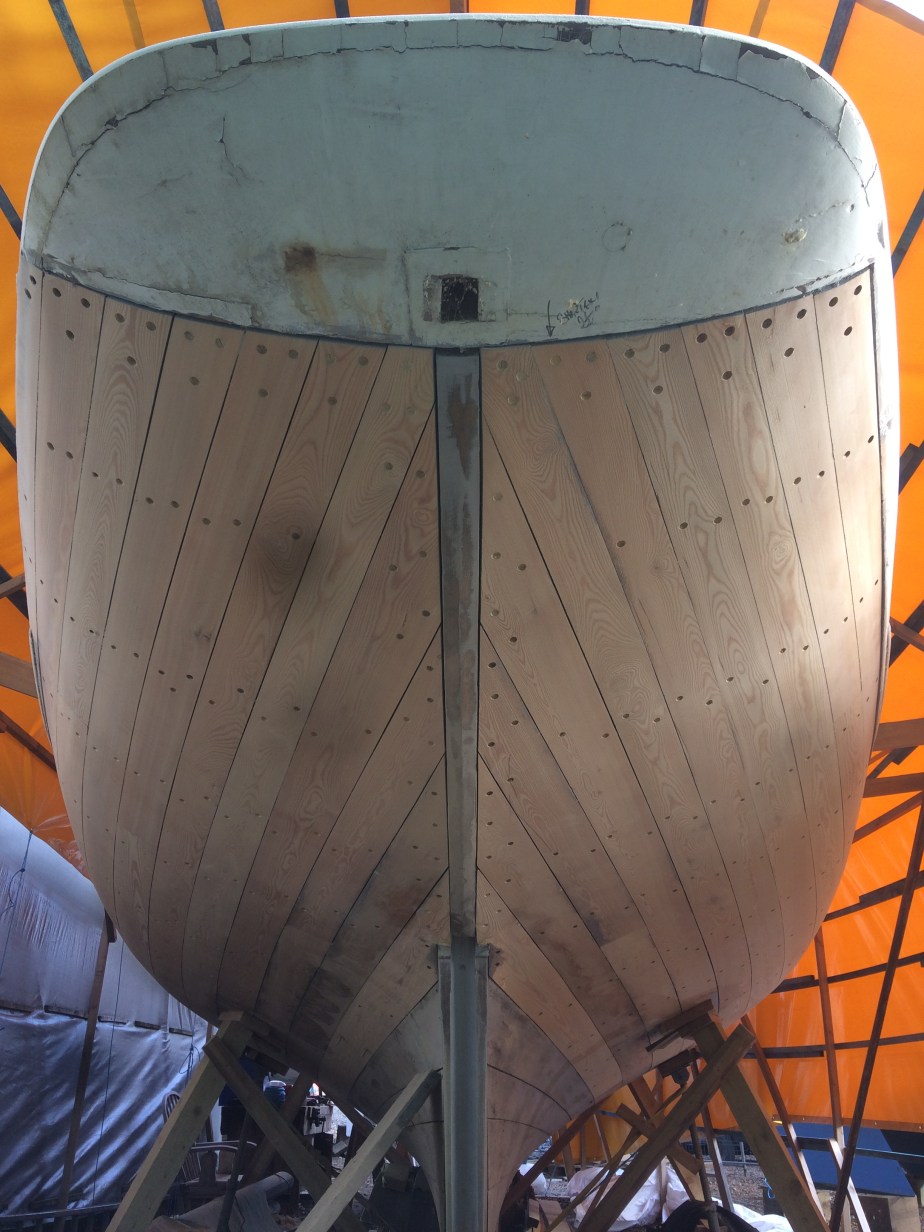
With the vessel turned over we could partially replank the underwater section of the hull. Luckily the original pitch pine keel was still in really good shape, requiring only a few oval repairs in order to correct edge damage.
Replacement planking was carried out in iroko. This material choice is a departure from the likely original use of cedar, and many planks had already been replaced in mahogany. Our biggest concern was for husbandry, the canoe is to be subjected to heavy use in the future and we are more concerned for longevity than weight.
Nine planks were replaced.

New Steamed Timbers.
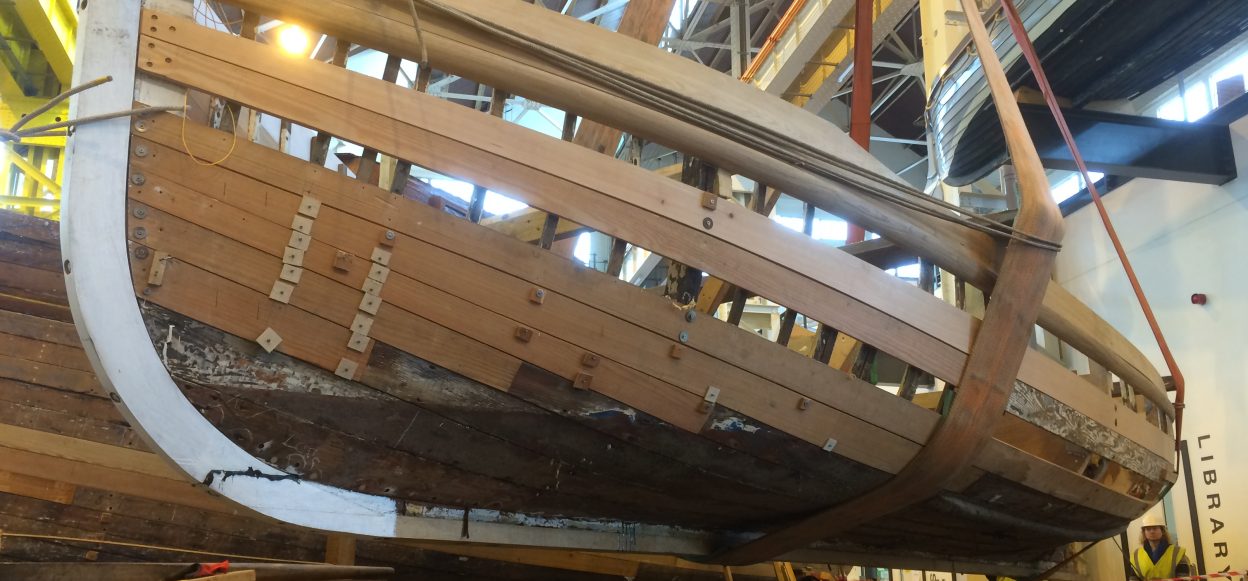
Steaming new timbers is always a little bit of magic, and a wonderful team effort. On the Liddesdale canoe the originals made from rock elm had rotted, snapped and been subject to many partial repairs over the years. We replaced all 47 in a day and a half. The new timbers were made from green European oak, with a heavy thumbnail profile cut by hand.
Fastening them all up took a fair while longer, particularly in the stems where access was troublesome.


Dismantling, Cleaning, Graving and Edge Repairs.
Liddesdale catchup.

It’s about time…
The Liddesdale Electric Canoe.
Oh wow, I’m extremely behind here. Over the next week I will rectify this, so look out for more pics and a much better description. For now though, have a look at these few pics to indicate the massive success that has been restoring Nancy Astor’s hundred year old electric canoe for the National Trust, and be aware there’s a big story to tell.


Planta, new Bulwarks.
I’ve made new stanchions for Planta’s bulwarks of oak in the traditional manner. Through deck halfway between every other frame end, and fastened to the sheer and top plank. The deck joint will be caulked and paid before the bulwark planks are fitted. We decided to add a nice reeded detail to the inner corners of the tapered stanchions as it felt appropriate.

This has involved a huge mock up process prior to starting in on the real materials. Dealing with Planta’s tumblehome and fine counter required more than a little visualisation.
Pictured you can see the mock up counter taffrail and the pair of 12 metre battens I made to represent the top of bulwark plank.
Planta, hull works in the depths of winter.
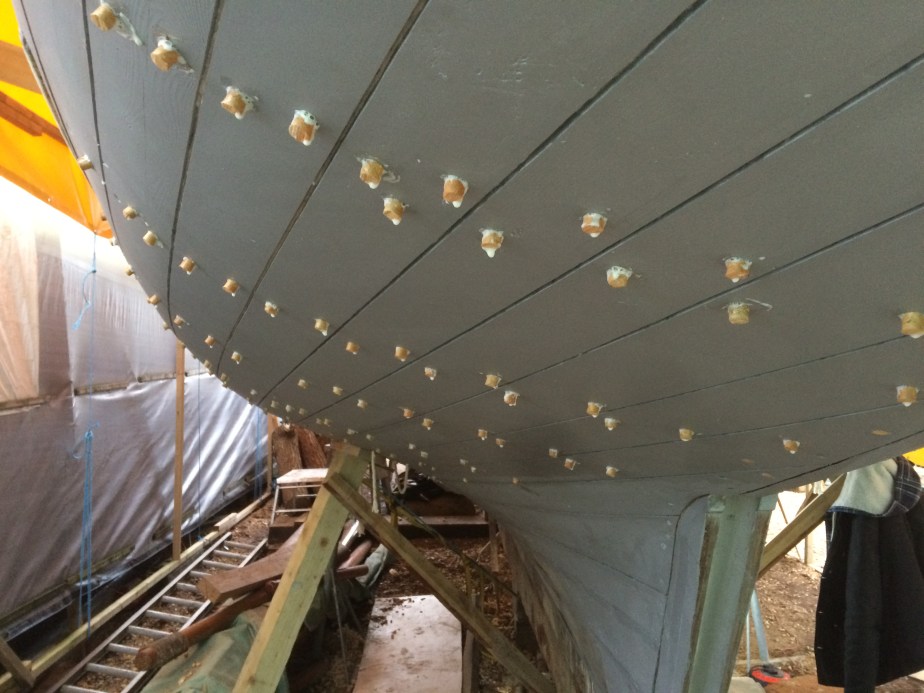
With the fairing complete the next stage was fairly big on repetitive tasks. Part one, rake the seams out with these natty rakes I made from old rat tail files. This gets all the seams nice and even ready for caulking.
Part two, caulk all those seams up with cotton boat caulk. It took me a fortnight and I’m pleased to say that I have caulked an entire thirty four foot boat, solo.
And part three, plug up every one of those counterbore screw holes. about twelve hundred of them. Phew.

Back to Planta, fairing the hull.

Back at Planta Genesta, the task of fairing the hull is more or less complete. Two weeks of intensely physical work, first with a power plane, then a lot of time with a wooden jack plane, followed by a hefty few days of belt sanding the entire hull. This has faired in all the previously flat planks, and now we can stand back and admire the really lovely shape of this vessel, with her beam, tumblehome and counter. It has been extremely satisfying seeing the shape come to life as I work, in fact some days it was all that kept me going as the work is brutal on the arms, shoulders and neck. The secret after power planing is to always always work diagonally both ways, work each section methodically and use sense of touch as well as a flexible batten to check she’s on the right track as you go. Even so, a first coat of paint is bound to show something up.