Liddesdale launched.

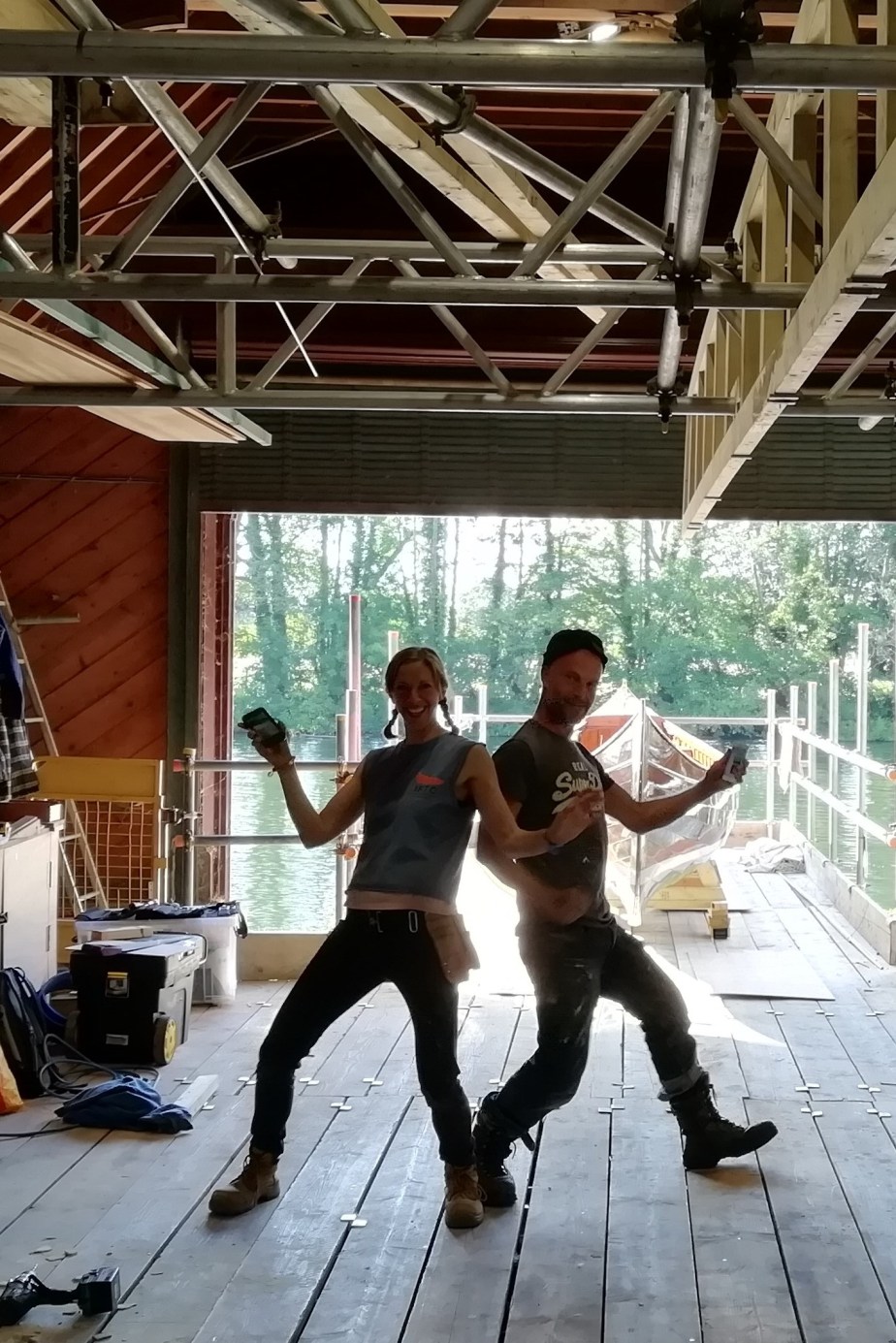
We got together at Cliveden in mid September and launched Nancy Astor’s canoe on a beautiful still autumn morning. It went like clockwork, and I was even a tiny bit dismayed to discover that she didn’t leak a drop. The vessel probably floating on her paint.

Cue a weekend ‘testing’. The Liddesdale is powerful, quiet and fast. Unsurprisingly she has character when it comes to manoeuvring, being much happier turning to starboard. Over the course of a few trips out however, we discovered ways to coax the best from the vessel. And with that, we handed over the keys to the National Trust with immense pride.

Finishing.

It’s proving hard to choose from so many great pictures, so please wade through the below as representative examples. The Liddesdale Canoe was finished with 16 coats of International Original varnish above the waterline inside and out. Below the waterline, dulux weathershield system with 6 coats primer, 9coats undercoat, a split and a top coat. Our colleague from college, Justin Miller joined us for two weeks in order to help us through the first ten coats. The sixteenth coat was applied after all electrical install and signwriting had been completed. She’s not perfect, but as good as we could possibly achieve in the environment we were working in.

IMG_8161

Fitting out and Stern Gear.

Liddesdale has new deck beams and new half bulkheads in Siberian larch. A new Keel band in 316 stainless and new stern tube, propshaft and skeg, all 316 stainless. She also has new sole boards made from quarter sawn douglas, tapered to suit. Originally these would have been cedar but we needed something harder wearing with regard to Liddesdale’s future use as a trip boat for the public. The rest of the fit out is all original, restored. The biggest triumph of this is probably the original fore and aft deck planks, painstakingly refitted by the very skilled Becci Haigh.

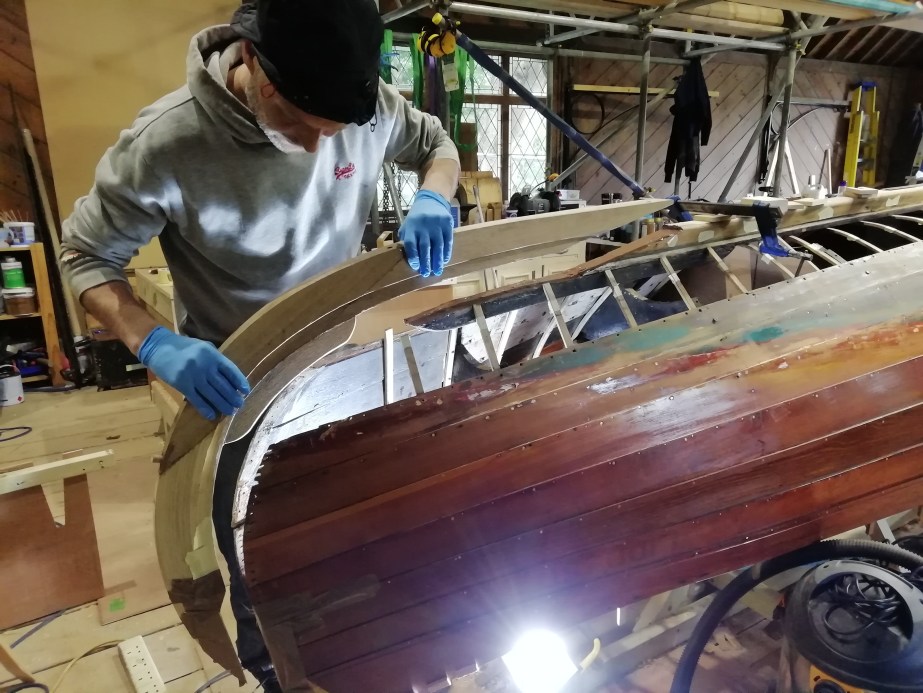
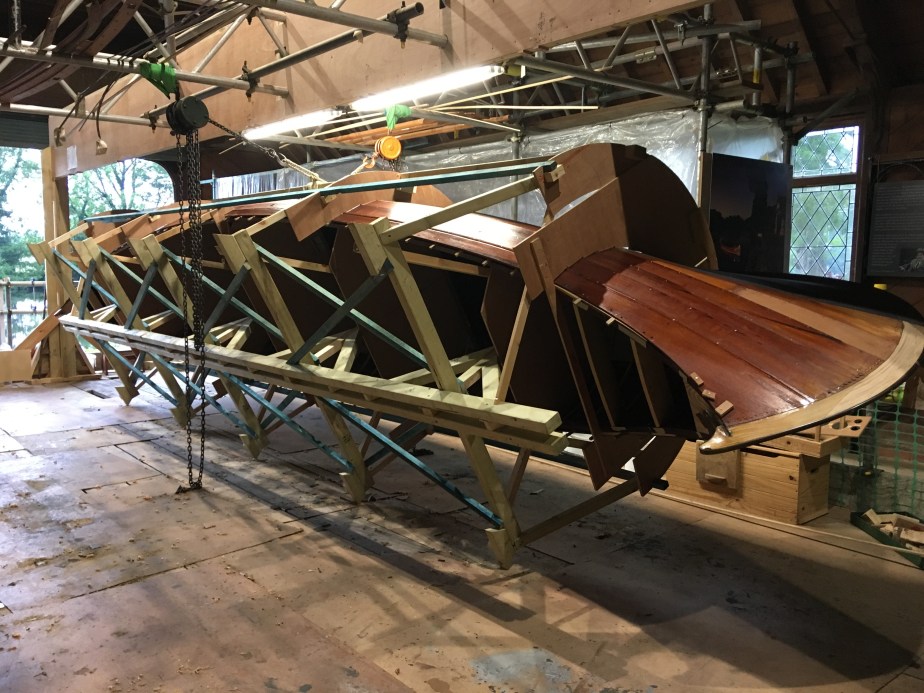
Turning her over and replanking the bottom.

With the vessel turned over we could partially replank the underwater section of the hull. Luckily the original pitch pine keel was still in really good shape, requiring only a few oval repairs in order to correct edge damage.

Replacement planking was carried out in iroko. This material choice is a departure from the likely original use of cedar, and many planks had already been replaced in mahogany. Our biggest concern was for husbandry, the canoe is to be subjected to heavy use in the future and we are more concerned for longevity than weight.

Nine planks were replaced.

IMG_0121

New Steamed Timbers.

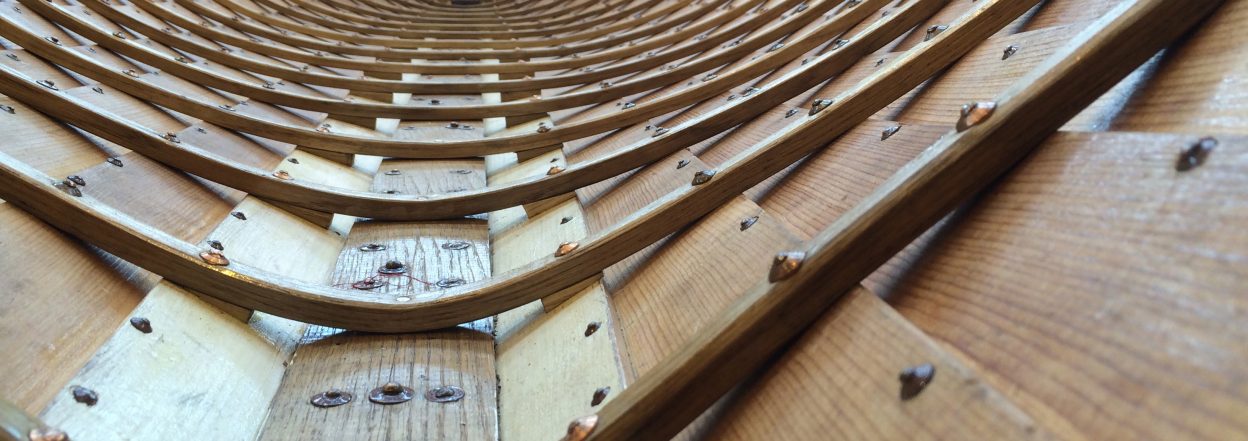
Steaming new timbers is always a little bit of magic, and a wonderful team effort. On the Liddesdale canoe the originals made from rock elm had rotted, snapped and been subject to many partial repairs over the years. We replaced all 47 in a day and a half. The new timbers were made from green European oak, with a heavy thumbnail profile cut by hand.

Fastening them all up took a fair while longer, particularly in the stems where access was troublesome.

IMG_7810

sdr